
 04069063398
 Clinic Locator
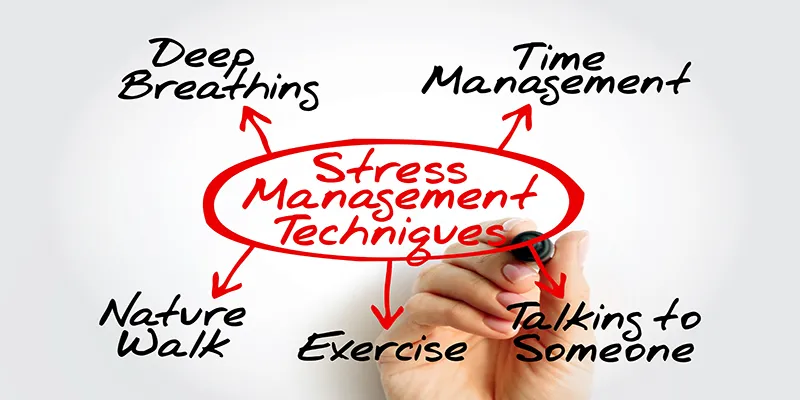
Stress Management Techniques for Better Health
With this fast-paced life, most people now take stress from even smaller things in life, and slowly it starts affecting their overall health physiologically. Chronic stress increases cortisol levels (the primary stress hormone) in the blood. And these high levels of cortisol increase blood pressure, make your immune system weaker, disrupt sleep, and increase cardiovascular disease risk.
Stress management is not about relaxing more. It involves giving your body the chance to recover from a state it was never built to sustain permanently. Continue reading to learn the best stress management techniques with the strongest clinical evidence behind them.
What Does Chronic Stress Do to Your Body?
Stress exists in two forms. Acute stress is short-term and resolves once the trigger goes away. Chronic stress is what happens when the stress response stays switched on for weeks or months without a chance to come back down. The consequences show up across the entire body, and in many cases, they show up in blood test results before you notice any symptoms in teh form of the following problems:
- Cardiovascular: Elevated cortisol raises blood pressure and accelerates arterial inflammation, increasing coronary heart disease risk by up to 40%.
- Immune: Chronic cortisol suppresses white blood cell activity, leaving the body less capable of fighting infections and slower to recover.
- Metabolic: Prolonged cortisol elevation raises blood glucose and contributes to insulin resistance over time.
- Mental Health: Chronic stress is one of the most significant drivers of anxiety disorders and depression, according to a 2025 National Academy of Medical Sciences India (NAMS) task force report.
- Sleep: Cortisol dysregulation disrupts the body's natural sleep-wake cycle, making stress progressively harder to manage.
Which Stress Management Techniques Work The Best?
A 2024 review in the International Journal of Environmental Research and Public Health assessed 16 stress reduction programmes across over 200 studies. The programmes that produced consistent, measurable reductions in cortisol and blood pressure had specific techniques in common. These are the ones worth knowing:
Controlled Breathing
Slow, deliberate breathing directly activates the parasympathetic nervous system (the system that counteracts the fight-or-flight response and lowers heart rate). Box breathing works like this: inhale for four counts, hold for four, exhale for four, hold for four. It is widely used in clinical settings because it produces a measurable drop in heart rate within two minutes.
Two minutes of box breathing before a stressful situation or at the end of a workday requires no equipment and no preparation. It is the most accessible technique on this list.
Physical Exercise
Thirty minutes of moderate aerobic activity, whether that is brisk walking, cycling, or swimming, reduces cortisol levels and triggers endorphin release. The calming effect lasts for several hours after the session ends. Regular exercise also improves sleep quality, which takes care of one of the biggest knock-on effects of chronic stress.
Mindfulness and Meditation
Mindfulness-Based Stress Reduction (MBSR), a structured 8-week programme developed at the University of Massachusetts, has produced documented reductions in cortisol, blood pressure, and anxiety across hundreds of clinical trials. The practice involves 10 to 20 minutes of focused attention on breathing and present experience each day.
Consistency across eight weeks is where the real benefits kick in. Beginners can even start with guided 10-minute sessions.
Yoga
Yoga combines controlled breathing, physical movement, and mindfulness simultaneously. In India, where yoga is culturally accessible, it is one of the most practical entry points for structured stress reduction. Two to three sessions per week of 30 to 45 minutes each produce measurable reductions in cortisol and improvements in heart rate variability (HRV, a measure of how well the autonomic nervous system is regulating the body) within four weeks.
Sleep as Active Recovery
Sleep is not passive downtime. It is the window during which the body regulates cortisol, repairs tissue, and consolidates memory. Chronic stress disrupts sleep, and poor sleep amplifies stress, a cycle that worsens without deliberate intervention.
A fixed wake time seven days a week, no screens for 30 minutes before bed, a dark and cool room, and no caffeine after 2 pm. These are the conditions your body needs to regulate cortisol properly overnight.
How to Differentiate Normal Stress and a Medical Problem?
Occasional stress is a normal response to life. The problem is when it stops being occasional and starts producing physical symptoms that do not go away. These are the signs that something needs a doctor's attention, not just a better evening routine:
- Headaches or migraines recurring at least once a week.
- Sleep disruption that lasts more than two to three weeks.
- Heart palpitations or chest tightness without a diagnosed cause.
- Digestive problems like irritable bowel syndrome that worsen under pressure.
- Unexplained weight gain, hair loss, or irregular periods in women.
- Anxiety or low mood that persists consistently for more than two weeks.
If any of these apply and have not been evaluated, a general physician is the right starting point. When you search for a general physician near me, you are looking for the doctor who can assess whether stress is affecting measurable markers like blood pressure and blood sugar, and rule out other underlying causes.
Get Personalised Advise for Stress Management at Apollo Clinic!
Stress management is a health priority, full stop. The body's stress response was built for short-term emergencies. If left unaddressed, chronic stress will raise your risk of heart disease and metabolic conditions over the years, with no obvious warning sign until something goes wrong.
If you suspect stress has already shifted your blood pressure, your blood sugar, or your sleep, visitApollo Clinic and speak with a general physician who can run the baseline tests and tell you where things actually stand.
FAQs
1. What is the most effective stress management technique?
There is no single answer that works for everyone. Controlled breathing, regular exercise, and mindfulness all have strong evidence behind them. Most people find that using two of these together, consistently, works better than relying on just one.
2. How long does it take for stress management techniques to work?
Controlled breathing works within minutes. Yoga and mindfulness show measurable cortisol reductions after four to eight weeks of regular practice. The most important thing is consistency, as occasional practice does not produce lasting change.
3. Can stress cause physical health problems?
Yes. Chronic stress raises blood pressure, suppresses immune function, elevates blood glucose, and increases coronary heart disease risk by up to 40%. These show up in blood test results. They are not just feelings.
4. Is managing stress part of preventive healthcare?
Yes. Preventive healthcare means catching risk factors before they become diagnosable conditions. A general physician can assess whether stress is already affecting your blood pressure or blood sugar levels at a routine check-up.
5. Does yoga actually reduce stress?
Yes. Two to three yoga sessions per week of 30 to 45 minutes each reduce cortisol levels and improve heart rate variability within four weeks. This is consistent across a large number of clinical studies, not just a few.