04069063398
 Clinic Locator
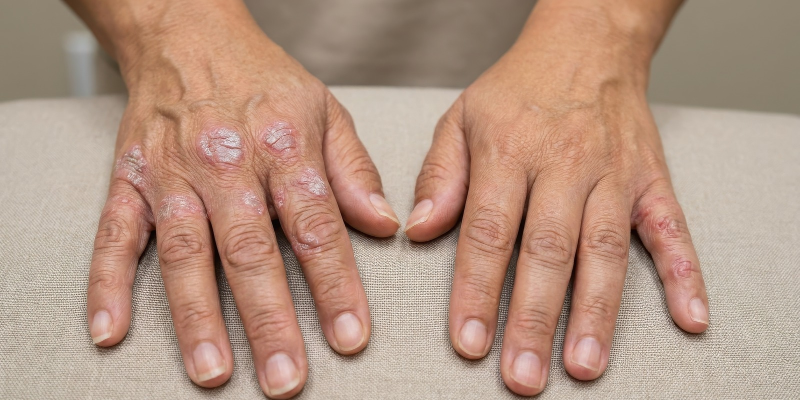
Psoriasis vs. Eczema: Understanding the Difference Between the Two
If you've noticed a red, itchy patch on your skin that won't go away, or keeps coming back in the same spot no matter what you do, you may have Googled and come across two terms: psoriasis and eczema. Both are common skin conditions with overlapping symptoms, which can make it difficult to tell them apart by appearance alone. That's exactly what this article can help you with: understanding the key differences between psoriasis and eczema, along with their triggers or treatments.
What is Psoriasis?
Psoriasis is a chronic inflammatory skin condition in which the immune system becomes overactive and causes skin cells to be produced more quickly than usual. Instead of shedding naturally over time, these cells build up on the surface of the skin, leading to areas that may become thick, dry, scaly and inflamed.
The severity can vary from person to person, with some people having small, localised patches and others experiencing more widespread skin involvement.
Psoriasis is not contagious, so it cannot spread from one person to another through touch. While there is no cure for psoriasis at present, various treatments can help control symptoms and reduce flare-ups.
What is Eczema?
Eczema is a general term for a group of conditions that cause the skin to become dry, itchy and inflamed. Atopic dermatitis is the most common type of eczema, and it often develops when the skin barrier does not work as effectively as it should. This can make the skin more sensitive to irritants, allergens and changes in the environment.
Eczema symptoms can come and go, with certain substances, environmental conditions or other triggers causing a flare-up. While there is no single cure for eczema, treatment and appropriate skin care can help manage symptoms, protect the skin barrier and reduce flare-ups.
What Do Psoriasis and Eczema Look Like?
Eczema and psoriasis can both cause inflamed, irritated skin, but they may look and feel somewhat different. Here are some of the features that may help distinguish them:
Psoriasis
Psoriasis often appears as well-defined, raised patches or plaques that may have thick, dry scales on the surface. On lighter skin, these patches may look pink or red with silvery-white scaling, while on darker skin they may appear darker, purple or grey.
The affected skin can feel thicker or rougher than the surrounding skin and may itch, burn or feel sore. In some cases, particularly where the skin is very dry or exposed to friction, it can crack and bleed.
Eczema
Eczema more often causes dry, irritated and inflamed skin that can become rough, flaky or cracked. Depending on the person's skin tone, the affected area may appear red, brown, purple, grey or darker than the surrounding skin.
Itching is one of the most prominent signs of eczema and can lead to repeated scratching, which may make the skin thicker or leathery over time. During a flare-up, the skin may also ooze or develop crusting, particularly when it has been scratched.
Where Do They Appear on the Body?
The areas affected can provide a useful clue when distinguishing between psoriasis and eczema, although both conditions can occur in many parts of the body. Common locations for both include:
Psoriasis
- Elbows and Knees: One of the more typical locations for psoriasis plaques.
- Scalp: May cause scaly patches that can extend beyond the hairline.
- Lower Back: Patches can develop across the lower back and buttocks.
- Nails: May cause pitting, discolouration, thickening or separation from the nail bed.
- Palms and Soles: Psoriasis can cause thick, scaly or cracked skin in these areas.
- Genital Area: It can also affect the skin around the genitals.
Eczema
- Hands: Particularly common in adults and may cause dry, cracked or irritated skin.
- Face and Neck: Often affected, especially in infants and children.
- Inside the Elbows: Eczema commonly appears in the creases of the arms.
- Behind the Knees: Another common location, particularly in older children and adults.
- Around the Eyes: The delicate skin around the eyes can become dry and irritated.
- Scalp: Some types of eczema can also affect the scalp.
The location can offer a clue, but it isn't enough to tell psoriasis and eczema apart on its own.
Psoriasis Vs Eczema: What's The Difference?
Here’s a quick comparison of the key psoriasis and eczema differences:
|
Feature |
Psoriasis |
Eczema |
|
What it is |
A chronic inflammatory condition involving the immune system and accelerated skin-cell turnover |
A group of inflammatory skin conditions, commonly linked to skin-barrier dysfunction |
|
Appearance |
Often causes well-defined, raised patches with thick, dry scales |
Often causes dry, inflamed, rough or flaky skin that may crack or ooze |
|
Itching |
May itch, burn or feel sore, but the intensity varies |
Itching is often a prominent symptom and may be intense |
|
Skin Texture |
Patches tend to be thicker and more clearly defined |
Skin may become dry, rough, cracked or thickened from repeated scratching |
|
Common Locations |
Elbows, knees, scalp, lower back and nails |
Hands, face, neck, inside the elbows and behind the knees |
|
Other Signs |
Nail changes and, in some people, joint symptoms can occur |
Cracking, oozing or crusting may occur, particularly after scratching |
What Can Trigger a Flare-Up?
A flare-up can happen when something aggravates the underlying skin condition. The trigger is not always obvious, and what causes symptoms to worsen can vary from person to person.
Psoriasis
Common factors that may trigger or worsen a psoriasis flare-up include:
- Stress: Emotional or physical stress can contribute to flare-ups in some people.
- Skin injury: Cuts, scratches, sunburn or other skin trauma can trigger patches at the site of injury.
- Infections: Certain infections, particularly streptococcal infections, can trigger or worsen psoriasis.
- Weather: Cold, dry weather may worsen symptoms, while some people also notice changes with other weather conditions.
- Medicines: Certain medicines can trigger or aggravate psoriasis in some people.
- Smoking and Alcohol: Both may contribute to more frequent or severe flare-ups.
Eczema
Eczema flare-ups can be triggered by things that irritate the skin or cause an inflammatory response, such as:
- Soaps and Detergents: Harsh cleansers and household products can irritate the skin.
- Fragrances: Perfumes and fragranced skincare products may trigger symptoms in some people.
- Dry Weather: Low humidity can cause the skin to lose moisture and become more irritated.
- Heat and Sweating: Hot weather and perspiration can worsen itching and inflammation.
- Fabrics: Wool and some synthetic materials may irritate sensitive skin.
- Allergens: Certain foods, dust mites, pet dander or other allergens may trigger eczema in some people, although this varies considerably.
Can You Have Psoriasis and Eczema at the Same Time?
Psoriasis and eczema were once often viewed as conditions that did not occur together, but research has shown that they can coexist in the same person at the same time.
The conditions may affect different areas at the same time, or their features may overlap in the same area. For example, a person may have the well-defined, scaly patches typically associated with psoriasis alongside areas of dry, intensely itchy skin associated with eczema.
How are They Treated?
Treatment for psoriasis and eczema depends on the type and severity of the condition, the areas affected and how often symptoms flare.
Psoriasis
Treatment aims to reduce inflammation, slow the rapid growth of skin cells and control flare-ups. Depending on the severity, a dermatologist may recommend:
- Topical treatments: Corticosteroids, vitamin D analogues, retinoids or other medicines may be applied directly to affected areas.
- Moisturisers: Emollients can help soften dry, scaly skin and reduce discomfort.
- Phototherapy: Controlled exposure to ultraviolet light may be recommended when psoriasis affects larger areas or does not respond adequately to topical treatment.
- Systemic medicines: Moderate to severe psoriasis may require medicines taken by mouth or injection that work throughout the body.
- Biologics: These targeted medicines can be used for certain people with moderate to severe psoriasis, particularly when other treatments have not worked sufficiently.
Eczema
Treatment focuses on reducing inflammation, relieving itching and restoring the skin barrier. Options may include:
- Moisturisers: Regular use of emollients helps keep the skin hydrated and supports the skin barrier.
- Topical corticosteroids: These are commonly used during flare-ups to reduce inflammation and itching.
- Other topical medicines: Calcineurin inhibitors and other prescription treatments may be used when appropriate.
- Phototherapy: UV treatment may be considered for persistent or more extensive eczema that has not responded adequately to other treatments.
- Systemic treatment: Severe eczema may require oral or injectable medicines that target specific parts of the immune response.
When Should You See A Doctor?
A new itchy or irritated patch does not always need immediate medical attention, except in some cases. Consider speaking to a doctor or dermatologist if you notice:
- Persistent Symptoms: The rash does not improve or keeps coming back despite basic skin care.
- Spreading Patches: The affected area is becoming larger or new patches are appearing.
- Severe Itching: Itching is interfering with sleep, work or daily activities.
- Pain or Bleeding: The skin becomes painful, cracks deeply or bleeds.
- Signs of Infection: You notice increasing warmth, swelling, pus, crusting or fever.
- Unexplained Changes: You cannot identify what is causing the skin changes or they do not resemble your usual flare-ups.
- Joint Symptoms: You have psoriasis-like skin changes along with persistent joint pain, stiffness or swelling, which can be associated with psoriatic arthritis.
Get Your Skin Concerns Checked at Apollo Clinic
At the end of the day, the only way to know for certain which condition you're dealing with is a proper examination. If a patch of skin has been bothering you for a while now, or you're simply not sure what you're looking at, it's worth getting it checked rather than waiting it out. Book a consultation with a dermatologist at Apollo Clinic and get a proper diagnosis. They can look at the pattern, ask about your history and confirm what's really going on, so you're not left guessing.
Frequently Asked Questions
Is eczema contagious?
No, eczema is not contagious. Like psoriasis, it cannot be passed from one person to another through touch or close contact.
Are psoriasis and eczema hereditary?
Both conditions tend to run in families, so having a parent or sibling with psoriasis or eczema can increase your likelihood of developing one, though genetics alone don't guarantee it.
Can children get psoriasis or eczema?
Yes, both conditions can appear in childhood. Eczema is particularly common in infants and young children, while psoriasis can develop at any age, including in children, though it's less common than in adults.
Does diet play a role in psoriasis or eczema?
Diet isn't considered a direct cause of either condition, but some people notice certain foods worsen their flare-ups. This varies a lot from person to person, so it's worth discussing with a doctor if you suspect a link.
Can psoriasis or eczema be cured permanently?
Neither condition currently has a permanent cure. However, with the right treatment plan, most people can manage symptoms effectively and go long periods with minimal flare-ups.
Do psoriasis and eczema leave scars?
Eczema doesn't typically scar unless the skin is repeatedly scratched or becomes infected. Psoriasis usually doesn't scar either, though changes in skin colour can sometimes persist after a patch clears.
How long does a typical flare-up last?
This varies widely depending on the person, the severity and how quickly treatment begins. Some flare-ups settle within a couple of weeks, while others can persist for months without proper management.